Commercial flat roofs are built for efficiency, but they come with their own set of challenges.
Unlike sloped residential roofs, flat roofing systems rely on proper drainage, sealed membranes, and routine maintenance to stay watertight. When one part of that system fails, problems can spread quickly.
The reality is that many commercial flat roof problems are preventable. Small issues like clogged drains or minor membrane damage can turn into major repairs if they’re not addressed early.
At Yellowfin Roofing, we help property owners and managers in Wilmington and the surrounding areas understand how their roofs perform and what steps to take to keep them in good condition.
Key Takeaways
- Most commercial flat roof problems are caused by drainage issues, membrane damage, or lack of maintenance.
- Ponding water, flashing failure, and leaks are among the most common issues.
- Regular inspections and flat roof maintenance tips can extend the life of your roof.
- Fast action and professional repairs help prevent larger structural damage.
If you’re seeing signs of wear, schedule your free estimate with Yellowfin Roofing.
Why Commercial Flat Roof Problems Happen Over Time
Flat roofs are not completely flat. They’re built with a slight slope to guide water toward drains or scuppers.
The problem is that even small drainage issues can disrupt that system.
Over time, debris builds up, materials expand and contract, and foot traffic from maintenance crews can wear down protective layers. These factors create weak points where water can collect or enter the building.
Common causes of failure include:
- Poor drainage design or clogged drains
- Standing water that does not evaporate quickly
- UV exposure breaks down roofing materials
- Temperature changes cause expansion and contraction
- Foot traffic around HVAC units and service areas
- Aging membranes and worn sealants
In areas like Wilmington, where commercial roofs face rain, humidity, and seasonal weather shifts, maintenance plays a major role in long-term performance.
The Most Common Commercial Flat Roof Problems
Ponding Water
Why it happens: Poor drainage, clogged drains, or uneven roof surfaces.
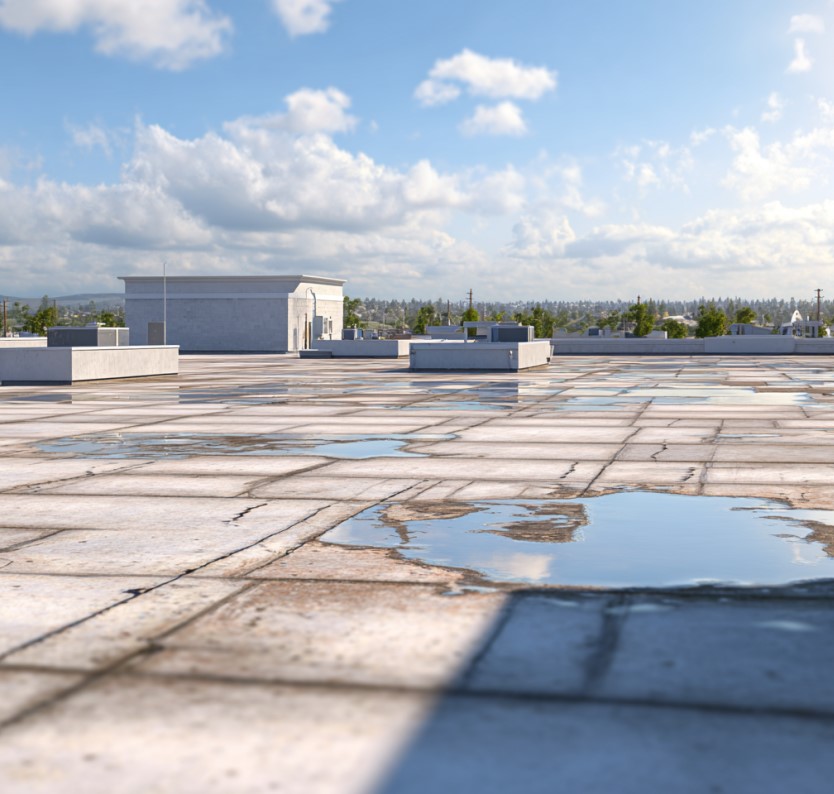
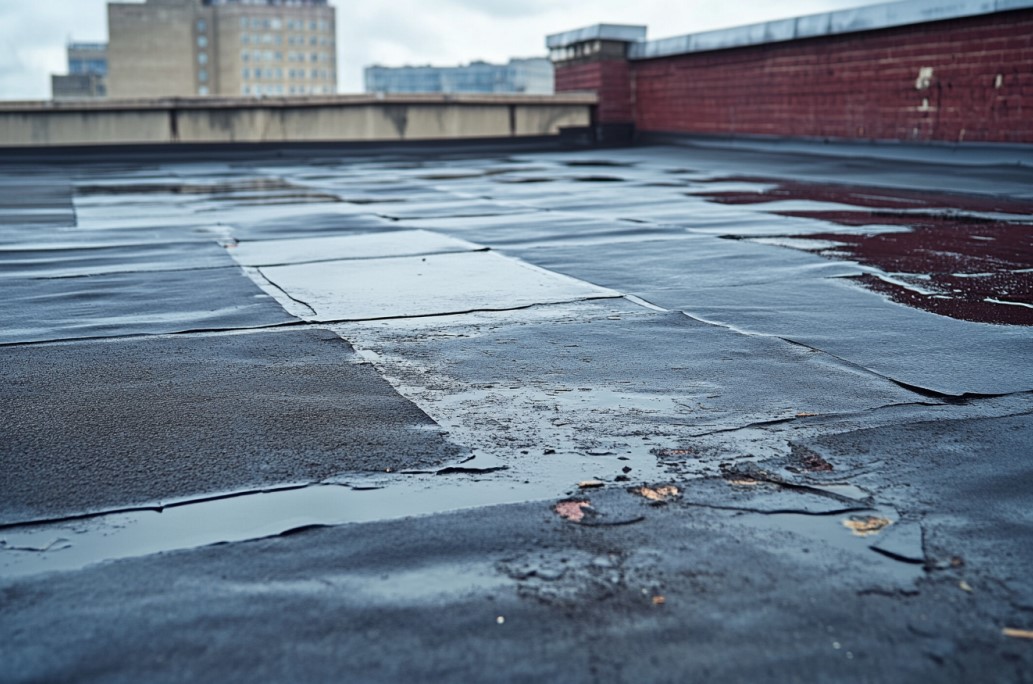
Ponding water is one of the most common commercial flat roof problems. When water sits on the roof for long periods, it can break down materials and increase the risk of leaks.
Common effects include:
- Material deterioration
- Algae or mold growth
- Added weight to the roof structure
- Increased likelihood of leaks
Even small low spots can become larger problems over time.
Membrane Damage
Why it happens: UV exposure, weather changes, and foot traffic.
Flat roofs rely on a membrane system such as TPO, PVC, or EPDM to keep water out. These materials are strong, but they can develop cracks, punctures, or weak seams.
Small damage may not seem urgent, but it can allow water to enter beneath the surface.
Common signs include:
- Visible tears or punctures
- Bubbling or blistering areas
- Loose seams or edges
- Soft spots underfoot
This is why routine inspections matter.
Flashing Failures
Why it happens: Aging materials, poor installation, or weather stress.
Flashing protects edges, seams, and transitions around vents, walls, and rooftop equipment. When flashing fails, water can enter at those vulnerable points.
Watch for:
- Cracked or separated flashing
- Loose edges
- Rust or corrosion
- Water stains near roof penetrations
Flashing issues are a common source of leaks on commercial roofs.
Clogged Drains and Gutters
Why it happens: Debris buildup over time.
Leaves, dirt, and roofing debris can block your drains and gutters, preventing water from flowing off the roof.
This often leads to:
- Standing water
- Overflow during storms
- Increased stress on the roofing system
- Water intrusion at seams and edges
Drainage should always be part of your maintenance plan.
Roof Leaks
Why it happens: Any combination of the issues above.
Leaks often result from underlying problems such as ponding water, membrane damage, or flashing failure.
Even a small leak can cause:
- Interior water damage
- Mold growth
- Insulation damage
- Operational disruptions
Leaks should always be addressed quickly to prevent further damage.
Flat Roof Maintenance Tips That Prevent Costly Repairs
Schedule Regular Inspections
Flat roofs should be inspected at least twice per year, typically in spring and fall.
Regular inspections help catch small issues before they turn into larger repairs.
Keep Drains and Roof Surfaces Clear
Remove leaves, dirt, and debris regularly. This helps prevent clogs and allows water to drain properly.
Monitor High-Traffic Areas
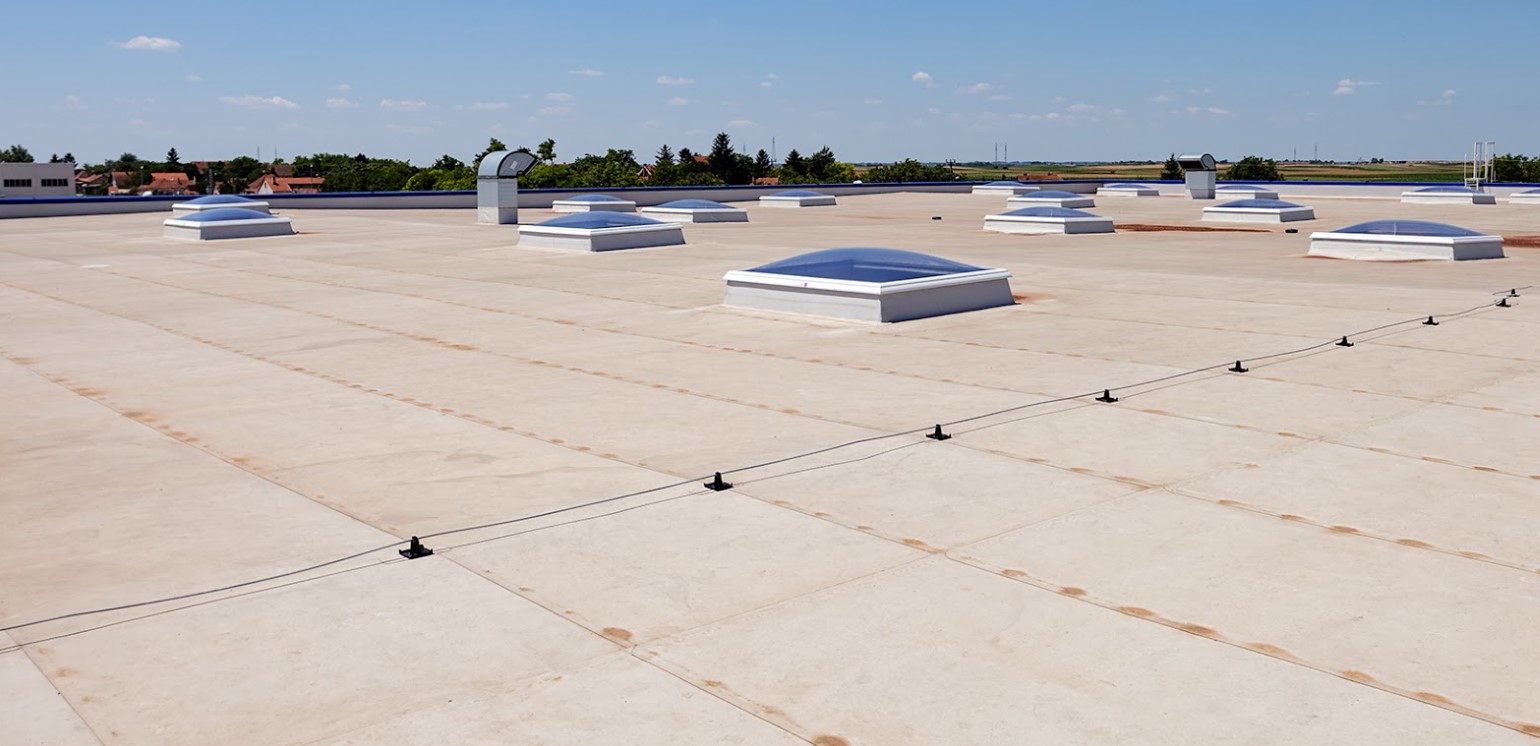
Areas around HVAC units, vents, and access points see more wear. These spots should be checked more often.
Address Small Repairs Early
A small tear or loose seam can quickly become a leak. Early repairs are usually faster and less expensive.
Check After Storms
Heavy rain and wind can shift debris, damage membranes, or clog drains. A quick check after storms can prevent long-term issues.
Work With a Professional Roofing Team
Flat roof systems are complex. A professional inspection ensures that underlying problems are not missed.
At Yellowfin Roofing, we provide clear assessments and recommendations. We want to make it easy to understand exactly what your roof needs.
TPO Roofing vs EPDM: What Property Owners Should Know
When dealing with commercial flat roof problems, the type of roofing system matters.
TPO Roofing
TPO (Thermoplastic Polyolefin) is a single-ply membrane known for energy efficiency and heat reflection.
Key benefits:
- Reflects sunlight and reduces heat buildup
- Strong seam welding for watertight protection
- Resistant to UV exposure
Considerations:
- Requires proper installation for long-term performance
- Seams must be maintained over time
EPDM Roofing
EPDM (Ethylene Propylene Diene Monomer) is a rubber-based roofing system.
Key benefits:
- Flexible material that handles temperature changes well
- Strong resistance to weather and aging
- Proven long-term performance
Considerations:
- Seams are glued rather than welded
- May absorb more heat compared to TPO
Choosing between TPO roofing vs EPDM depends on your building, budget, and performance goals. Both systems can work well when installed and maintained properly.
What to Do When Commercial Roof Repairs Are Needed
Even with strong maintenance, repairs are sometimes necessary.
If you notice signs of damage, take action quickly.
Start with:
- Document visible issues with photos
- Check for interior signs like stains or leaks
- Avoid temporary DIY fixes that may hide larger problems
- Schedule a professional estimate
At Yellowfin Roofing, we provide commercial roof repair in Wilmington and the surrounding areas. Our team identifies the source of the problem and recommends solutions that make sense for your building.
What Property Owners Should Do Next
If you want to prevent commercial flat roof problems, start with a simple plan:
- Schedule inspections twice per year
- Keep drains and surfaces clear
- Watch for ponding water and debris
- Check high-traffic areas regularly
- Address small issues early
- Schedule a professional estimate when needed
Flat roof systems perform best when they are maintained consistently.