A hurricane resistant roof on the Delaware and Maryland coast comes down to three things working together: how firmly the roof deck is fastened, how well the underlayment is sealed against wind-driven rain, and whether the covering is rated for the wind speeds mapped for your zone. Along the Sussex County and Worcester County shore, those wind speeds run higher than most homeowners expect, and salt air adds a second problem that inland homes never deal with. Homes in Lewes, Rehoboth Beach, Ocean City, and Salisbury all face the same mix of tropical systems, nor’easters, and constant coastal humidity. This guide walks through what actually makes a roof hold up near the water, which materials earn their keep in salt air, and the upgrades worth prioritizing before the next storm season. The goal is simple: a roof that stays on the house and keeps water out when the wind picks up.
Key Takeaways
- Coastal Sussex County, Delaware carries design wind speeds of roughly 120 to 130 mph, which requires architectural-grade shingles with enhanced nailing patterns, not standard three-tab shingles.
- The IBHS FORTIFIED Roof standard has been tested to withstand winds up to 130 mph and cuts water intrusion through the roof deck by more than 95 percent in high winds.
- Salt air corrodes bare and scratched steel quickly, so aluminum is the preferred metal near the ocean because it forms a self-healing oxide layer and will not rust.
- The strongest storm-ready upgrades are deck attachment, a sealed roof deck, enhanced edge protection, and properly rated covering, in that order of impact.
What makes a roof hurricane resistant on the Delaware and Maryland coast?
A hurricane resistant roof is built as a connected system rather than a single product. Wind does its damage at the weak links: the deck pulls away from the rafters, water sneaks under a loose edge, or the covering peels off because it was never nailed for coastal speeds. Fix those weak links and the whole roof performs better.
The clearest benchmark is the IBHS FORTIFIED Roof standard, a construction standard from the Insurance Institute for Business and Home Safety that has been tested to withstand winds up to 130 mph. It calls for three core upgrades: fastening the roof deck with ring-shank nails in a tight pattern, sealing the roof deck so it blocks more than 95 percent of water intrusion when shingles are lost, and reinforcing the vulnerable roof edge where uplift starts.
Those numbers matter here because coastal wind loads are real and local. Sussex County’s own building code guidance puts design wind speeds along the coast at roughly 120 to 130 mph, and the coastal wind zone reaches further inland than many homeowners assume. Shingles have to carry a wind rating that meets that mapped speed, which rules out standard three-tab products.
How does salt air change coastal roofing material choices?
Salt air is the quiet problem that separates a beach roof from an inland one. Moist, salty air accelerates corrosion on exposed metal, so fasteners, flashing, and metal panels all have to be chosen with the coast in mind. A material that lasts 40 years in Hockessin can fail far sooner within a mile of the bay or ocean if the wrong metal is specified.
This is where coastal metal roofing earns attention. Steel panels rely on a protective coating, and once that coating is scratched or cut, the exposed core can start to rust in salty air. Aluminum does not have that problem because it forms a thin, self-healing oxide layer that stops corrosion before it spreads, which is why aluminum is the common recommendation for homes close to saltwater.
Flashing and gutters deserve the same scrutiny, since those details fail first when the metal is wrong for the environment. The same salt-air logic carries over to the rest of the exterior, which is why our siding installation and replacement work on coastal homes leans toward corrosion-resistant and moisture-tolerant materials rather than whatever is cheapest.
Which roofing materials hold up best to nor’easters and high wind?
There is no single right answer, but a few materials consistently outperform the rest on the shore. The right choice depends on the building, the budget, and how close it sits to the water.
Architectural asphalt shingles rated for high wind, installed with the enhanced six-nail pattern coastal code expects, are the workhorse for most homes and handle nor’easter gusts well when installed correctly. Aluminum standing-seam metal is the premium choice near saltwater, pairing strong wind performance with corrosion resistance that outlasts coated steel. For flat and low-slope roofs on coastal commercial buildings and multi-family properties, fully adhered membranes resist uplift better than mechanically attached systems in high wind.
Matching the material to the wind map is the part homeowners skip most often, and it is also where roof wind damage usually starts. A roof that is correct for a Wilmington street may be under-rated two hours south. Property owners around the Maryland shore can see how we approach this on our roofing services in Ocean City, MD page, where the wind and salt exposure drive the recommendations.
Which storm-ready upgrades should coastal homeowners prioritize?
If you are improving an existing roof rather than replacing it today, the upgrades below deliver the most protection per dollar. They are listed in rough order of impact, so start at the top.
- Reinforce the roof deck attachment. Re-nailing the deck with ring-shank nails in a tight pattern can nearly double its resistance to wind uplift, and it happens anyway during a full replacement.
- Add a sealed roof deck. A sealed deck or taped-seam underlayment keeps water out even if the wind strips shingles, which is where most storm-related interior damage comes from.
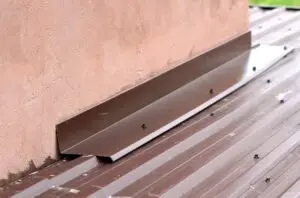
- Upgrade the roof edge and drip metal. The edge is where uplift begins, so heavier edge metal fastened on tighter spacing buys real protection.
- Install covering rated for your mapped wind speed. Confirm the shingle or panel carries a wind rating that meets the coastal zone’s 120 to 130 mph design speed.
- Secure flashing, vents, and gutters with corrosion-resistant fasteners. These small parts fail first in salt air and let water in behind the covering.
What should you do about roof wind damage after a coastal storm?
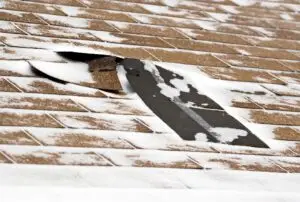
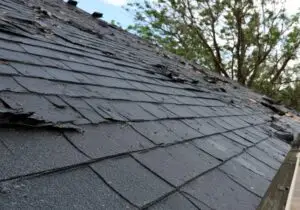
After a tropical system or a hard nor’easter, check for roof wind damage before small problems grow. Lifted or missing shingles, exposed nail heads, bent flashing, and granules collecting in gutters are all early signs that the covering took a hit.
Not every issue is visible from the ground, and walking a wet or steep coastal roof is genuinely dangerous, so a professional inspection is the safer call. Prompt storm damage roofing work also protects an insurance claim, because insurers look for timely action and clear documentation of what the storm caused.
Keep photos, note the date of the storm, and avoid letting an untended leak sit through the next rain. When the damage is real, our storm damage repair team documents the loss and handles the repair so the roof is back to full strength before the next system rolls up the coast.
How do you choose a storm-ready roofing contractor on the Delaware and Maryland shore?
Pick a contractor who treats coastal exposure as its own problem, not an afterthought. The right partner specifies materials for salt air, installs to the coastal wind map rather than a generic minimum, and can explain why each choice suits your location.
Credentials are a useful shortcut here. Yellowfin Roofing is a GAF Master Elite and GAF President’s Club contractor, a tier reserved for the top one percent of GAF contractors nationally, and our inspectors are HAAG Certified for residential roofing. That combination means the warranty backing and the inspection rigor are both real.
Local knowledge is the other half. A roof in Salisbury faces different exposure than one in Wilmington, and the material and fastening choices should reflect that. Homeowners in Maryland can start with our roofing services in Salisbury, MD to see how we tailor the work to the Wicomico County coast.
Coastal Storm Roofing FAQs for Delaware and Maryland Homeowners
What is the most hurricane resistant roof shape?
Hip roofs, which slope on all four sides, generally handle hurricane-force wind better than gable roofs because wind flows over them with less uplift on any single face. Roof shape matters, but deck attachment, a sealed deck, and a properly rated covering protect a home more than shape alone, so a well-built gable roof can still perform well on the coast.
Are metal roofs better than shingles near the ocean?
Aluminum metal roofing is an excellent coastal choice because it resists both high wind and salt-air corrosion, and it typically lasts far longer than asphalt near saltwater. High-wind architectural shingles still perform well and cost less, so the better option depends on your budget, how close the home sits to the water, and how long you plan to stay.
How much wind can a coastal Delaware roof be required to handle?
Along the coast in Sussex County, design wind speeds run about 120 to 130 mph, and the covering must carry a wind rating that meets that mapped speed. The coastal wind zone also extends further inland than many homeowners expect, so a home a few miles from the beach can still fall under the stricter requirement.
Does a stronger roof lower my homeowners insurance?
It often can. Roofs built to a recognized standard such as IBHS FORTIFIED can qualify for insurance premium credits in many coastal markets, and even where a formal discount is not offered, a storm-ready roof reduces the odds of a large claim. Ask your insurer which upgrades and documentation they credit before the work begins.
Protect Your Coastal Home Before the Next Storm
If your home sits along the Delaware or Maryland shore, schedule a free roof inspection with Yellowfin Roofing today and find out exactly what it takes to make your roof storm-ready.